
"I wear this shirt to sleep every night."
Somebody told us that at a pawn trade show. About a T-shirt we gave them for free.
Nobody says that about a pen.
I was at another trade show where people were giving away the cheapest little tchotchkes they could find: sunglasses, hats, backpacks, those thin woven grocery bags. And it's always the freaking cheap pens.
Local businesses do the same thing every day. Insurance agencies, pawn shops, jewelry stores, all of them.
They think they're building a brand. They're building it wrong.
At Pawn Leads, my company, we do the opposite. We spend $8,000 to $10,000 a year on T-shirts and give every one of them away for free. Five years later, people still wear them.
That didn't happen by luck. Most giveaways miss for the same reason most gifts miss. The giver isn't really thinking about the person getting it, or what they'd actually use.
And for most people, your free stuff is the only gift they'll ever get from you.
So first, how to think about giving anybody anything. Then exactly how we do it with shirts, and how you can copy it.
Part one: think like the person getting it
We've all given the six-out-of-ten gift
We've all given that gift. The one we knew was only a seven out of ten. Maybe a six.
It wasn't quite right for them. They smiled and said thank you anyway, because they're nice, and they still appreciated it.
But we knew. As the giver, we've all had that feeling: ugh, I missed the mark on that.
A polite thank-you doesn't mean it landed. And a gift that doesn't land doesn't do anybody good.
"It's the thought that counts" is usually a disguise
After a gift like that, somebody always says it. "It's the thought that counts."
Now, I'm not saying there's no value in remembering somebody. I'm not saying be ungrateful.
But most of the time, I think that saying is a disguise. It's a way to let somebody down easy when they didn't really put the effort in to get the gift right. They thought about you, so that's all that matters. But did they really?
No, it's the effort that counts. It is the thought, if the thought is truly there. At face value, the words are true. But the meaning of the saying has changed over the years.
The real problem is that when we give, we're not truly thinking about the person getting it. The whole point of giving is putting yourself in their shoes. What would be useful for them? What would they like? What would they actually wear? What would they actually use?
What I'm saying is that the value of a gift really comes from the quality of the gift itself. The best gifts you've ever gotten just connected, just right.
Researchers tested this with real gift exchanges at a museum. When the gift was good, how much thought the giver put in made no difference to the person getting it. Thought only counted when a friend or family member handed over a bad gift. That's the disguise, right there. And between strangers, thought never counted. Only the quality of the gift did.
So real thought isn't thinking of them. It's thinking like them.
Don't buy the watch guy a watch
Now put yourself in the shoes of somebody who really loves something. Don't try to beat them at the thing they know best.
Say your buddy is a serious watch guy. A lot of people make the mistake of buying him a watch.
He's an enthusiast. He knows every detail. You will never pick the watch he would pick, because you don't care about watches the way he does.
You think you nailed it. You missed.
Buy the accessory instead: a good cleaning kit, a servicing kit, a display case for the collection. Something he probably wouldn't buy for himself, but that's super cool sitting next to the thing he loves.
Think about anything you've been passionate about in your life. For me, it's computer hardware. There's not a chance on this planet anybody could buy me hardware, because they don't know the nuance I know.
I'm also a huge Harry Potter nerd. My parents know they can't buy me tech, so they buy me Harry Potter collectibles. Whatever random piece they find, they can't miss.
And it works because I actually use it. It's all on display behind me in the room where I record videos and do my Zoom calls. My parents are basically buying accessories for my computer setup.
That's what matters. I can use it.
Only bet money that matters
Knowing the right gift is half of it. The other half is putting something real behind it.
A friend taught me this. I honestly don't remember which one, but the lesson stuck.
If you're going to make a bet, make it with money that matters. Otherwise, don't bet at all.
What's the point? If it's not money that matters, there's no meaning to it. Nobody has any skin in the game.
Money that matters is different for everybody. The bet that keeps one guy up at night is pocket change to the next.
Giving works the same way. Put real value on the table: real effort, and money that matters to you. Buy something really nice, something that means something to them. Otherwise you're just going through the motions.
Now, money that matters doesn't mean buying the most expensive gift. I'm not telling you to go bankrupt on gifts. I'm not telling you to give away the house, or the kitchen sink.
I'm telling you to stop being cheap.
That's the whole point of money that matters. Get to the level where it matters to you. Not the most expensive gift, and not the cheap one. Being cheap is the issue. Being cheap is what gives you a reputation for being cheap and low quality.
It's the usefulness that counts
Money that matters gets you out of cheap. What makes the gift land is how useful it is.
And it's not about the hours you put in. That's true of business as a whole, and capitalism as a whole. Just because you make a thing doesn't make it valuable. You can spend a million hours crafting a sculpture, and that sculpture can still suck.
What makes something valuable in the market is how rare it is and how useful it is.
Rarity is the shirt from a concert you went to years ago. You can't get that one anymore, so it's the one you keep.
But when you're giving a gift, most of the time the value comes from the usefulness. That's what I mean by the quality of a gift. It doesn't have to be the most expensive thing. It has to be good enough that they actually use it.
The best thing you can give somebody is their new favorite thing. Something they use or wear every day. Every time they do, they think of you.
So let's give useful gifts. It's not the thought that counts. We need to get rid of that saying. It's the usefulness that counts.
Get The Local Business Machine, free
The ebook first, free. Then a note from me when I have something worth your time.
Part two: how we built shirts people still wear
We all get this in our personal lives. Nobody wants to give the six-out-of-ten gift to somebody they care about. So why do so many businesses hand one out by the thousand?
Your free stuff is the only gift most people get from you
In business, money that matters counts even more. People judge you harder on what you give away for free than on what they pay you for.
Think about volume. Way more people touch your free stuff than your paid stuff. That's how marketing works: you give free things away to the masses. Free shirts, free pens, free bonuses, free ebooks. So for most people, your free stuff is the only thing they'll ever get from you. It's how they'll remember your brand.
And those people talk. They're going to recommend you, or steer people away from you.
So what are they going to say about you? If the only thing they ever got from you was a cheap pen, a cheap hat or a cheap pair of sunglasses, that's your brand to them. It's their first impression of you, and maybe their only one.
Is that the impression you want? Is that really the point?
This is where people mix up the point. The point of giving something away is not to get your logo into as many hands as possible. It's to give people a meaningful impression of your brand, of you as the owner, and of the quality you give your customers.
In a 2023 study by PPAI, the promo industry's largest trade association, 70% of consumers said they tend to equate the quality of a promo product with the reputation of the company that gave it to them.
Remember that museum study? Between strangers, only the gift counted. That was about people, not companies. But to most people walking past your booth or into your store for the first time, you're a stranger.
How you do one thing is how you do everything. At least, that's how it looks to the person holding your free pen.
It's probably not even true. You probably do great work. But you made one critical mistake: you thought about your pocketbook instead of their impression.
We put it all on one thing
A lot of people don't spend real money on this stuff. They figure they've already spent $10,000 on the big stuff, so the giveaways get whatever is left. Then that money gets split across 15 different tchotchkes: hats, pens, frisbees, water bottles. Two bucks each.
Now none of it is any good. Every person who walks away from your booth or out your door is holding something cheap, and being cheap is what murders your brand.
Don't spread yourself too thin. Pick one thing and go all in. There's no being half pregnant. Invest money that matters.
For us, that one thing is shirts. We spend $8,000 to $10,000 a year on them.
Your number doesn't have to look like ours. It just has to be enough that you'd care if it ended up in the trash.
If you want a brand your customers actually talk about, build it on a backbone of quality. Everything must be quality. Period. The end.
The two shirt mistakes we refuse to make
Free T-shirts are the perfect example. A lot of businesses that give them away make the same two mistakes.
The $3 shirt: we buy the best we can find
They won't spend $12 or $15 on a shirt, because, well, it's $15 a freaking shirt. So they buy the $3 or $4 shirts instead.
In their head it's fine. "I'm not wearing them anyway."
That's the whole problem. If you won't wear it, the person you give it to won't wear it either. So it ends up in a drawer or straight in the trash, and you wasted the money anyway.
In a 2026 PPAI survey of U.S. consumers, two-thirds said they'd rather get fewer, high-quality items. The top reasons people threw merch away were that it wasn't useful or it was poor quality.
So give something that's really useful. It doesn't have to be expensive. It has to be insanely high quality. That's why we buy the highest quality shirts we can find.
The logo on the front: ours goes behind the art
When most businesses do a custom shirt, they put their own logo on the front and call it a day. They're making it about themselves.
"Here's a cheap shirt with my logo on it. Now go advertise for me." That's a selfish gift. It's the giver thinking about himself instead of standing in their shoes.
Few people keep your stuff because it's your brand. In that same 2023 PPAI study, only 14% of people said they kept a promo product because they identify with the company or brand. Most kept it because it was useful.
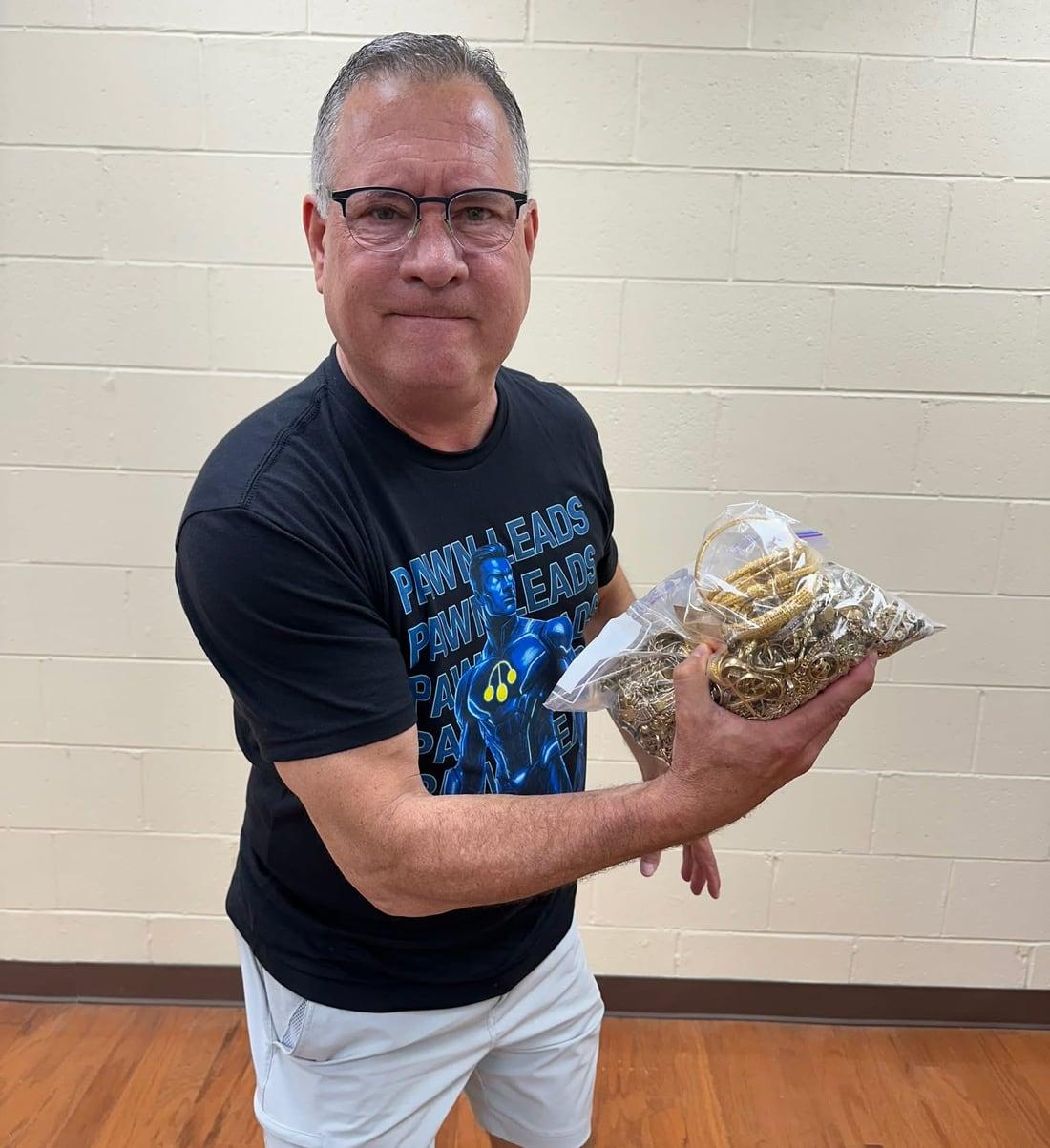
Our name is on every shirt we make, but it's behind the main point. Literally. It sits behind the artwork.
It's the afterthought, never the headline. People don't wear our shirts because they say Pawn Leads. They wear them for what's on top.
We design for what they're proud of
We work a lot in the pawn industry. And pawnbrokers are really, really proud of being pawnbrokers. They're passionate about the work and about who they are.
So we make cool, catchy, pop culture pawn shop shirts they can't get anywhere else. Shirts that say something about them, not about us.
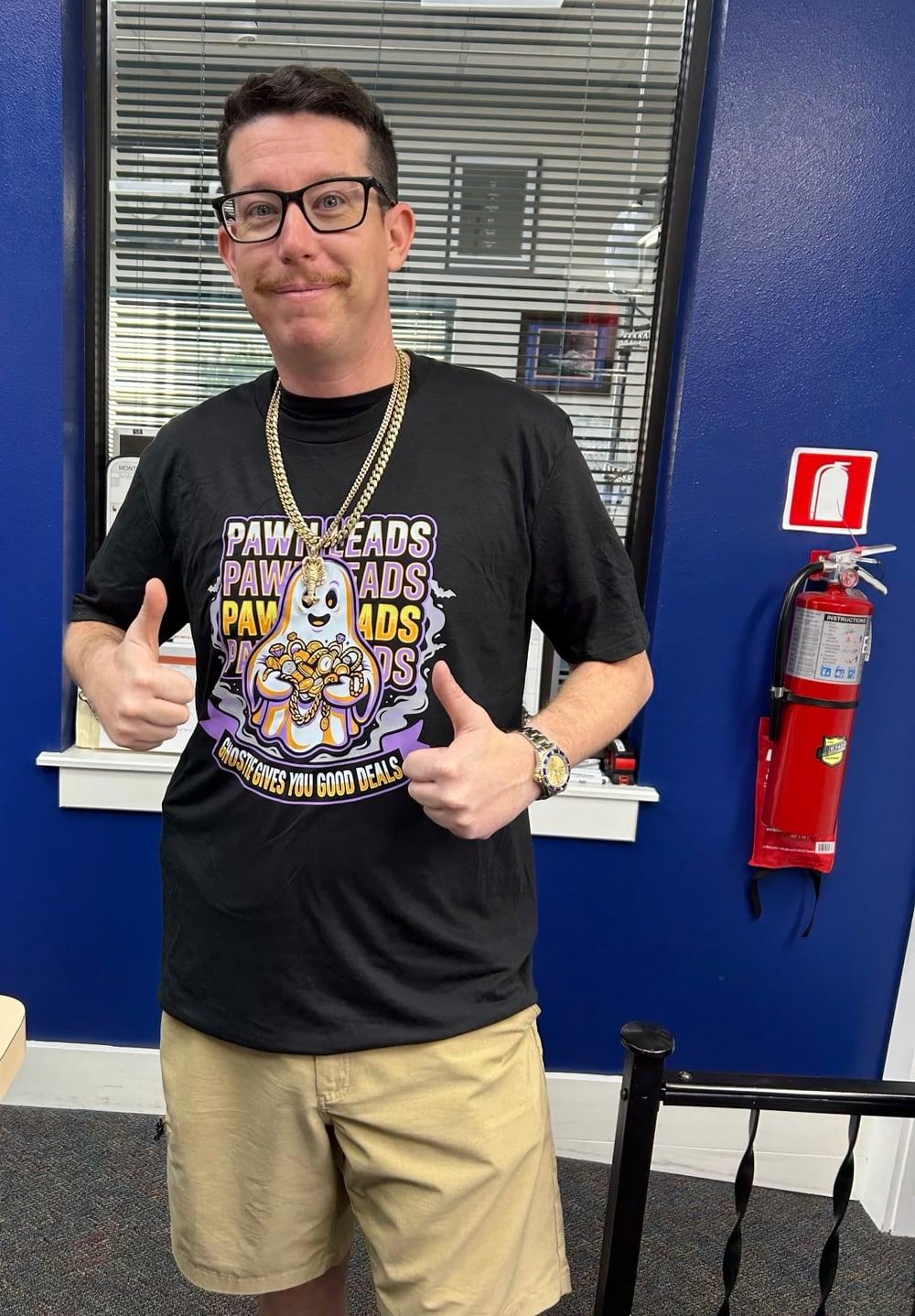
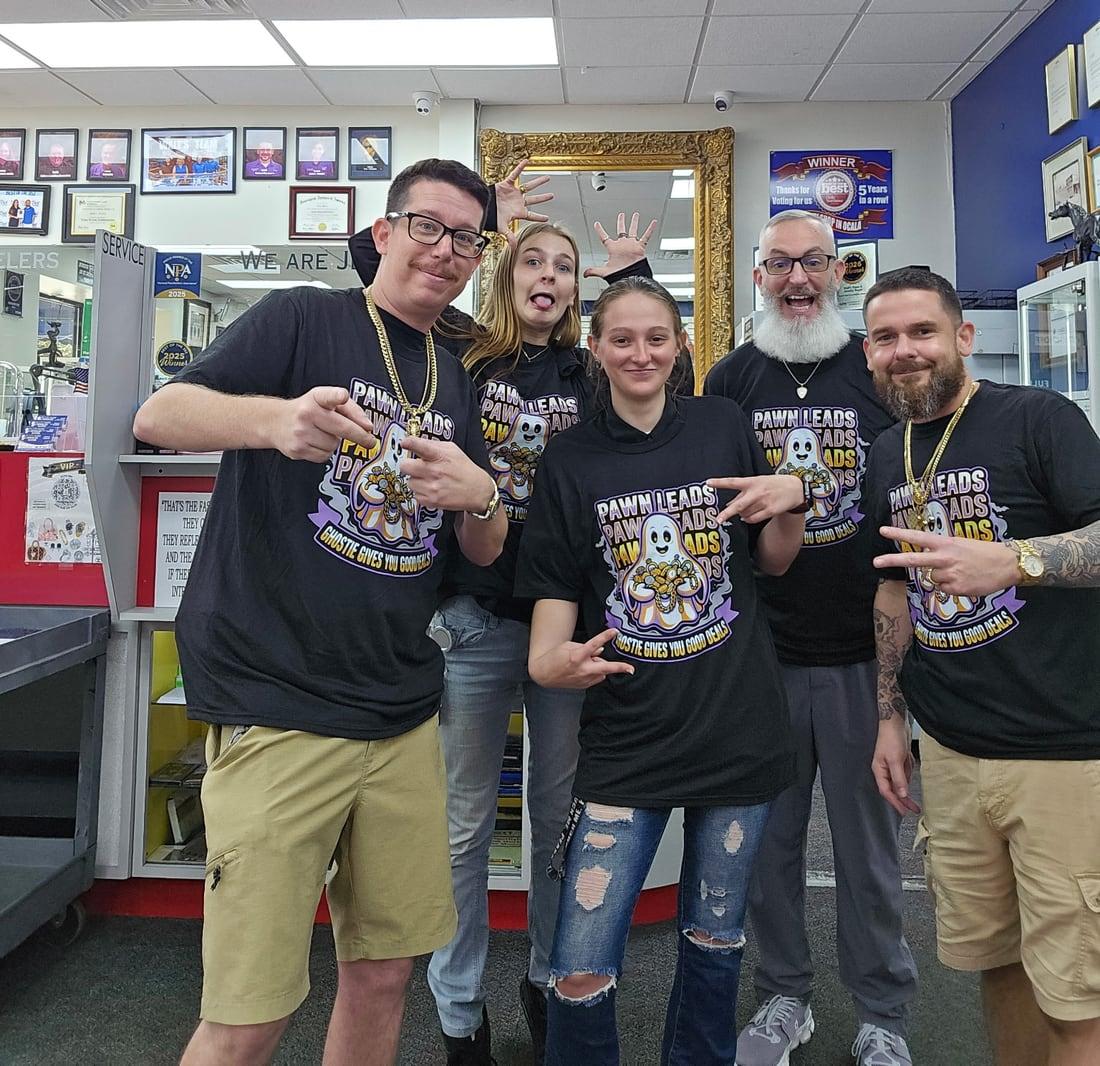
(And yes, for the Harry Potter nerds, we made a Harry Pawn-er shirt. You can spot it in the photo at the top.)
It has to be high enough quality that they want to wear it, and the design has to be cool enough that they actually care about it.
We spend a lot of effort and a lot of time designing these shirts and buying the right ones. More time than we spend on anything else in the company right now. They're our pride and joy.
The hours alone don't make them good, though. Remember the sculpture. All that effort goes into getting each shirt right for the person wearing it.
It's the watch guy rule again. We give them an accessory to the thing they already love most, which is being a pawnbroker.
Our secret sauce: never the same shirt twice
Quality and design get the shirt worn. The next level is what gets people collecting them.
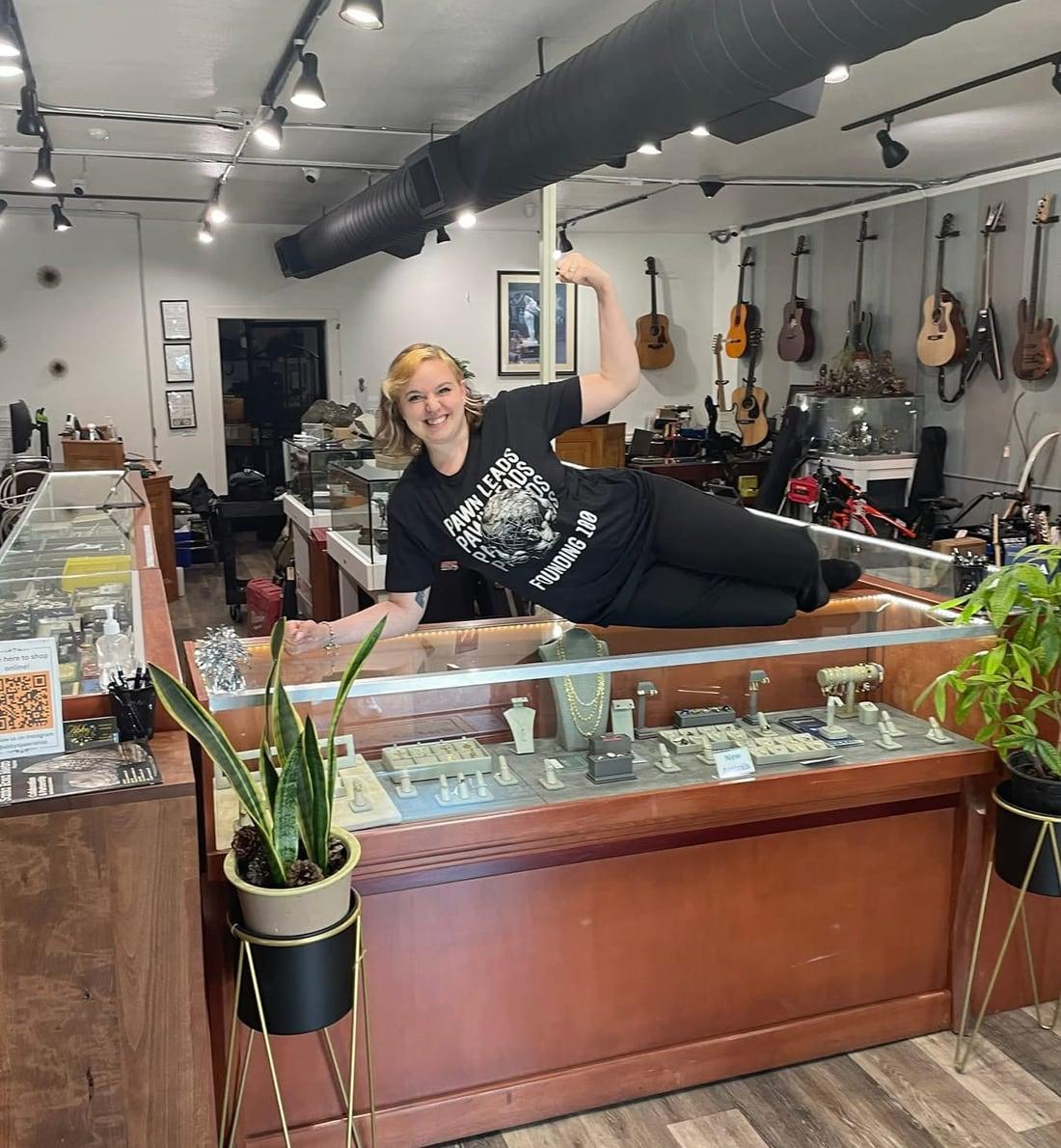
We made them limited edition. Collectible. Every trade show and every pawn conference we go to, we make a brand new shirt. We never print an old one again.
That means you can never get a previous shirt. If you weren't at that show, you'll never get a chance at that shirt.
So people collect them, year over year over year, because they're rare. People love them. Ask somebody about theirs and they'll tell you which show it's from and what year they got it.
It's created an aura around them. It's the concert shirt all over again. That's the rarity half I was talking about.
Free, no strings, and people beg for them
We've given every one of these shirts away for free. We've never charged for one. We've never asked for anything in return.
A gift with strings attached is still the giver thinking about himself.
And people seek us out. They come find our booth. They beg us for these shirts.
That's what opens the conversation. We gave them something of real value first, so they actually want to talk to us.
It built us a brand of friendship, of being part of the industry and part of our customers' world. It shows we care.
Today, hundreds if not thousands of people across the United States wear our shirts. Here are two more things people tell us at pawn trade shows:
"My daughter's favorite shirt is your Pawn Leads shirt."
"All of my team members wear your shirts to work in."
A free shirt from a vendor became somebody's work uniform. It got so useful that the industry wanted it.
Remember the six-out-of-ten gift, where they smile and say thanks because they're nice? Nobody wears a shirt to sleep every night just to be polite.
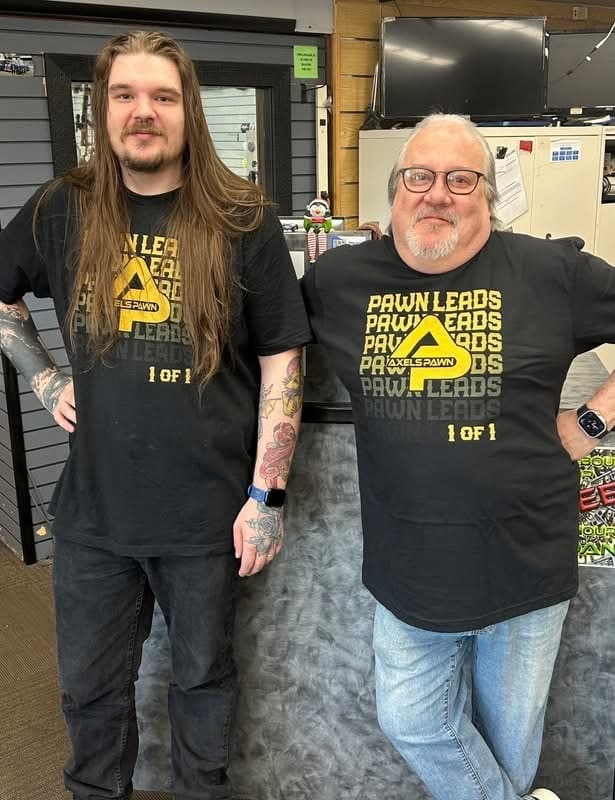
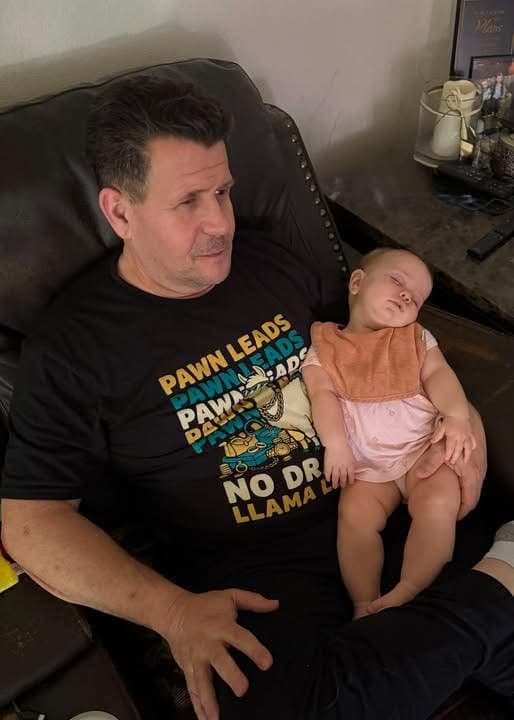
Every photo in this post, including the group at the top, is somebody who chose to wear one of our shirts on a normal day.
Your turn: what to give away instead of cheap pens
Before you order another box of cheap pens, run it through these.
Make it about them. Put yourself in their shoes. Design it around who they are and what they're proud of. Your name goes behind or below the design, never as the headline.
Don't buy the watch guy a watch. Find what your customer is into, then give them the accessory they'd never buy for themselves.
Fewer, better. Put money that matters behind it, and spend it on fewer things that are actually great. The best $10 pen on the market in the hands of 200 of your best customers beats a $1.12 pen in the hands of everybody who walks by.
Make it limited. One per season, one per event, one per year. When it's gone, it's gone.
Take the six-out-of-ten test. Would you actually use it yourself? If you wouldn't, neither will they. And if you would, ask whether it's a ten for them or just a six.
Three quick examples:
Insurance agency. When you write somebody a new auto policy, hand them a real car emergency kit with a good jump starter in it, not a flimsy flashlight. Your name goes on the case, small.
Pawn shop. Somebody buys a guitar off your wall? Send them home with a good strap and a fresh set of strings. They'll think of you every time they play.
Jewelry store. When someone buys an engagement ring, give them a really nice travel ring case or a proper cleaning kit, with your name inside the lid. They'll reach for it every time the ring comes off.
Look, man. Put yourself in their shoes. If you're going to give something away for free, make it useful. Stop giving away cheap stuff, because it just goes in the trash.
The shirts are one way we stay top of mind, and the full system for bringing new customers in and keeping them coming back is in my free Local Business Machine ebook, at the bottom of this page.